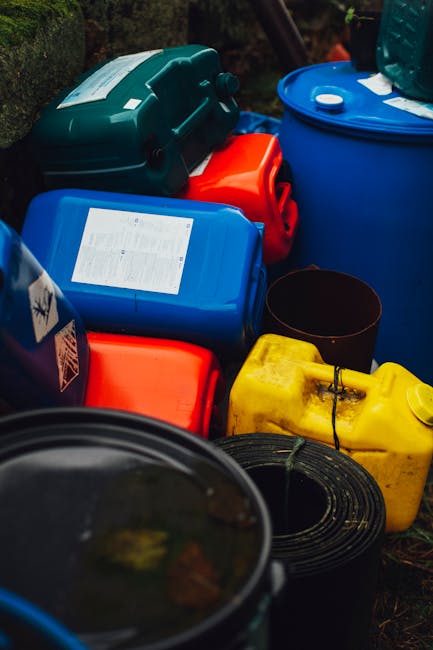
Hackney Council rules for hazardous waste from cleaning: a practical guide for homes and businesses
If you are dealing with leftover chemicals, contaminated cloths, used solvents, or other awkward by-products after a cleaning job, the question is usually the same: what counts as hazardous waste, and what do Hackney Council rules for hazardous waste from cleaning actually mean in practice? It sounds dry on paper, but in real life it can get messy fast. One wrong bin, one careless pour-down-the-sink moment, and you can create a safety issue, a compliance problem, or both.
This guide breaks everything down in plain English. You will learn how hazardous cleaning waste is typically identified, how to store it safely, what good practice looks like in Hackney, and where cleaning contractors, landlords, and business owners often go wrong. We will also cover practical steps, common mistakes, and a simple checklist you can use before anything leaves the premises. No drama. Just the useful bit.
Table of Contents
- Why Hackney Council rules for hazardous waste from cleaning Matters
- How Hackney Council rules for hazardous waste from cleaning Works
- Key Benefits and Practical Advantages
- Who This Is For and When It Makes Sense
- Step-by-Step Guidance
- Expert Tips for Better Results
- Common Mistakes to Avoid
- Tools, Resources and Recommendations
- Law, Compliance, Standards, or Best Practice
- Options, Methods, or Comparison Table
- Case Study or Real-World Example
- Practical Checklist
- Conclusion
- Frequently Asked Questions
Why Hackney Council rules for hazardous waste from cleaning Matters
Cleaning creates waste that does not always behave like ordinary rubbish. Some of it is harmless, some of it is not, and some of it only becomes risky once it is mixed, stored badly, or tipped into the wrong place. That is why local expectations around hazardous waste matter so much.
For a householder, this might be as simple as a small tin of solvent-based product, a bottle with a strong chemical residue, or a contaminated wipe that should not go in a general waste bag. For a cleaner or facilities manager, the risks are broader: spillages in transit, exposure to staff, foul smells, damage to drains, and the very unglamorous reality of sorting waste after a busy job on a rainy London afternoon.
In Hackney, as in the rest of the UK, the big idea is straightforward: identify hazardous waste correctly, keep it separate, store it safely, and hand it over through a lawful route. If you get those basics right, you reduce risk for people, property, and the environment. To be fair, that is the whole game.
This also matters because a lot of cleaning waste looks innocent. A cloth may just look dirty. A container may be half-empty. A solution may smell faintly of citrus and not much else. But if it has been used with strong chemicals, bleach, solvents, adhesives, pesticides, or certain stain-removal agents, it can still need special handling. It is the kind of detail that gets missed when everyone is rushing.
For businesses, there is another angle: customer trust. A cleaner who follows proper waste controls feels more professional. That is why many operators keep their broader procedures documented through pages such as their health and safety policy and recycling and sustainability approach. Even if the waste volume is small, the standard should still be high.
How Hackney Council rules for hazardous waste from cleaning Works
Let's keep this practical. When people talk about hazardous waste from cleaning, they usually mean waste that may be harmful because of its chemical content, contamination, flammability, toxicity, irritation, or environmental impact. The exact classification depends on what it is, what it was used for, and how contaminated it has become.
In normal cleaning work, examples can include:
- Leftover concentrated cleaning chemicals
- Solvent-based stain removers
- Empty containers with significant residue
- Used absorbent materials after a spill
- Contaminated protective gloves or wipes in some situations
- Wastewater or sludge from specialised cleaning processes where chemicals are involved
What matters most is not the label on the product alone. It is the actual risk profile of the waste. Some cleaning waste can go through ordinary disposal if it is low-risk and thoroughly rinsed or uncontaminated. Other material should be separated and managed more carefully. This is where many people trip up, because they assume all "cleaning waste" is the same. It is not, not even close.
For workplaces, a sensible approach is to follow a simple sequence: identify, segregate, store, label, transfer, and record. That sounds formal, but it is just a disciplined way of preventing contamination and confusion. A small stockroom shelf, clearly marked tubs, and one person responsible for checks can make a huge difference.
If you work in carpet care, upholstery care, or other specialist services, you are more likely to encounter chemical waste from pre-treatments and stain removal. Pages such as stain removal and steam carpet cleaning sit in that world, where the difference between regular wastewater and controlled waste can become important very quickly.
One important caution: if you are unsure whether something is hazardous, treat it cautiously until it is properly identified. That is usually the safer move. A bit boring, perhaps, but boring is good when chemicals are involved.
Key Benefits and Practical Advantages
Following the right approach to hazardous cleaning waste is not only about avoiding trouble. It also makes day-to-day work smoother. The benefits are practical, not theoretical.
- Better safety for staff and residents - fewer spills, less exposure, and lower risk of accidental contact.
- Cleaner storage areas - segregated waste is easier to manage and less likely to leak or smell.
- Lower chance of drainage problems - keeping harmful liquids out of sinks and gullies protects plumbing.
- More predictable compliance - good routines reduce the chance of incorrect disposal.
- Less panic during inspections or audits - when records and storage are organised, you can answer questions calmly.
- Better environmental practice - hazardous waste handled properly is less likely to cause wider harm.
There is also a commercial advantage. A business that handles waste well usually handles other details well too. Customers notice that, even if they cannot see the waste room. You can smell it in the fresh linen, the clean hallways, the absence of chemical sludge under a sink. Small things, but they add up.
For cleaning firms especially, this links neatly to trust pages like about us, insurance and safety, and the way pricing and quotes are presented. People do not want a bargain that leaves them with a mess later.
Who This Is For and When It Makes Sense
This topic matters to a few different groups, and each one has slightly different concerns.
Homeowners and tenants
If you have used specialist cleaners, strong stain removers, bleach-heavy products, or a DIY chemical mix that has gone sideways, you may end up with waste that should not just be tossed into the nearest bin. The same applies after a deep clean following a spill, pet accident, or mould issue. If you are arranging pet stain and odour removal, for example, you may be dealing with a mix of cleaning solutions and contaminated materials that need sensible handling.
Landlords and letting agents
End-of-tenancy work can generate awkward waste: old bottles, stained cloths, packaging from commercial-grade products, and the occasional unpleasant surprise hidden behind appliances. A clear routine protects both the property and the next occupant.
Cleaning businesses
Professional cleaners need a repeatable method. That includes staff training, stock control, transport arrangements, and proper disposal routes. If your team works in larger premises, commercial carpet cleaning and similar services may produce more waste than a domestic job, so a structured process becomes essential.
Facilities managers and office operators
In a busy site, hazardous waste can quietly accumulate in cupboards and cleaning trolleys. Someone always thinks another person sorted it. That is how problems begin. A named owner for waste handling solves more issues than people expect.
So when does it make sense to review the rules? Usually when you introduce stronger chemicals, when a job produces contaminated absorbents or liquids, when staff change, or when storage has become a bit of a jumble. If you have to pause and ask, "Where does this actually go?" then the answer is probably that you need a clearer system.
Step-by-Step Guidance
Here is a simple way to manage hazardous waste from cleaning without overcomplicating it.
- Identify the waste
Check what product was used, what it contacted, and whether it is contaminated. Read labels and keep the original container where possible. If the material came from a spill or stain removal process, consider the whole item contaminated, not just the visible residue. - Separate it from general waste
Do not mix suspicious liquids, saturated wipes, or chemical containers with everyday rubbish. Mixing waste is how small issues become expensive ones. - Contain it properly
Use a suitable, sealed container. Keep lids closed. Make sure nothing can leak into the floor or another bag. A few minutes spent on containment saves a lot of hassle later. - Label it clearly
Mark what it is, when it was generated, and which area or job it came from. Simple labels beat clever ones. - Store it safely
Keep it in a cool, dry, secure place away from food, heat sources, and access by unauthorised people. A cupboard full of random bottles is not a system. It is just a cupboard. - Arrange lawful disposal
Use an appropriate collection or disposal route. For businesses, this usually means working with a competent waste contractor and keeping records. For households, the route may be different, but the principle is the same: do not improvise. - Keep a record
Note what was disposed of, when, and how. If you are a business, records help prove good practice. If you are at home, a simple note can help if you are dealing with a recurring problem or repeated job.
A useful habit is to build waste handling into the job checklist from the start. That way, the end of the shift does not become a scramble. And yes, the final five minutes of any cleaning job are often the most chaotic. Always.
Expert Tips for Better Results
Here are a few practical habits that make a real difference.
- Keep products in their original containers whenever possible. Original labels are often the quickest way to understand the hazard.
- Train staff on "what not to pour away." Most mistakes happen at the sink.
- Use dedicated waste tubs for chemical cloths and wipes. Do not let them drift into mixed rubbish bags.
- Review stain-removal products regularly. Some formulas are stronger than you need. A gentler product may solve the problem without creating as much waste.
- Build a spill response routine. The faster the cleanup, the smaller the contamination footprint.
- Store a spare sealable container on site. It sounds minor, but when a bottle leaks at 4:30 pm, you will be glad it is there.
If your work includes delicate materials, the waste side matters even more. For example, curtain cleaning, upholstery cleaning, and rug cleaning can all involve pre-tests and specialist spot treatments. The product choice should be as considered as the cleaning itself.
A little rule of thumb: if you would not be comfortable tipping the residue into a family kitchen sink, pause and think again. That sounds obvious, but in the middle of a busy schedule, obvious things are exactly what people forget.
Common Mistakes to Avoid
Most hazardous waste problems come from the same handful of errors.
- Assuming all cleaning waste is non-hazardous - it is not, especially after specialist work.
- Mixing waste streams - once things are mixed, classification and disposal become harder.
- Pouring liquids down drains without checking first - this can create plumbing, environmental, and compliance issues.
- Using damaged containers - leaks often start small and become a proper headache overnight.
- Missing labels - unlabeled containers create uncertainty and delay.
- Storing waste next to food or open public areas - a bad idea, plainly.
- Letting waste build up - the longer it sits, the higher the risk of a spill or mix-up.
One of the easiest mistakes to make is overconfidence. People who are good at cleaning can sometimes assume they are automatically good at waste handling too. Different skill set, really. Related, but different.
If you manage regular services like carpet cleaning or sofa cleaning, the waste part should be reviewed as carefully as the cleaning chemistry and drying process. That is where the hidden risk sits.
Tools, Resources and Recommendations
You do not need a huge kit to manage cleaning waste well. You do need a few practical tools and a repeatable system.
| Tool or resource | What it helps with | Why it matters |
|---|---|---|
| Sealable waste containers | Holding contaminated wipes, cloths, or small liquid residues | Reduces leaks, odours, and accidental contact |
| Durable labels | Identifying contents and generation date | Prevents confusion and supports safe transfer |
| Spill kits | Containing accidental releases | Limits spread and shortens cleanup time |
| Written waste procedure | Staff training and consistency | Makes correct handling the default, not the exception |
| Secure storage cupboard | Keeping waste away from the public and from heat or food | Protects people and property |
| Waste transfer records | Tracking disposal | Helpful for business accountability and routine checks |
For companies, it also helps to keep related operational documents close at hand, such as terms and conditions, payment and security information, and privacy policy. That may sound unrelated, but in practice, organised businesses tend to be organised in more than one area.
If you are comparing service providers, ask how they handle waste from specialised cleaning, whether they separate contaminated materials, and how they prevent cross-contamination on site. A confident, specific answer is usually a good sign. A vague answer is not.
Law, Compliance, Standards, or Best Practice
Without pretending to give legal advice, the core compliance principle is simple: hazardous waste must be identified, kept separate where necessary, handled safely, and disposed of through the right route. In the UK, businesses normally need to follow recognised waste duty-of-care principles, and local council expectations will sit within that wider framework.
For Hackney operations, the safest way to think about the rules is this: do not assume local collection arrangements will accept hazardous material with ordinary rubbish. Do not decant unknown liquids into unlabelled bottles. Do not store waste in a way that risks leaks, fumes, or access by the public. And do not forget that some cleaning by-products may also fall under additional controls if they are flammable or otherwise especially risky.
Good practice usually includes:
- Correct identification of the waste stream
- Separate storage from general waste
- Clear labelling
- Secure containers
- Staff awareness and training
- Documented handover or disposal records for businesses
For people working in the trade, that lines up neatly with a strong health and safety policy and sensible insurance coverage. It is not paperwork for the sake of it. It is part of being able to show you take risk seriously.
Truth be told, most compliance problems do not start with big dramatic breaches. They start with tiny habits: a bottle left open, a cloth dropped into the wrong bin, or one person assuming somebody else sorted it out. That is why routines matter more than heroic clean-ups later on.
Options, Methods, or Comparison Table
There are a few ways cleaning waste is typically handled. The right option depends on the waste type, volume, and how often you generate it.
| Method | Best for | Pros | Watch-outs |
|---|---|---|---|
| General waste disposal | Non-hazardous, uncontaminated cleaning waste | Simple and convenient | Only suitable if the waste really is non-hazardous |
| Segregated hazardous storage | Contaminated cloths, solvent residues, strong chemical waste | Safer, clearer, easier to control | Needs labels, space, and discipline |
| Specialist waste collection | Businesses with regular hazardous waste volumes | Structured and compliant | Requires planning and documentation |
| On-site reduction and substitution | Teams wanting to cut waste at source | Less waste, fewer disposal issues | May need product review and staff retraining |
The most practical approach is often a mix. For example, low-risk waste can go through the normal route, while anything contaminated or chemically aggressive is separated for controlled disposal. That balance keeps costs and risk under control. Not too clever, not too sloppy.
Case Study or Real-World Example
Picture a small Hackney cleaning team finishing a sofa and mattress job in a flat near a busy high street. The job includes a spot treatment, an odour neutraliser, a pre-spray, and a few heavily soiled cloths. Nothing dramatic. Just a standard evening shift with enough moving parts to get messy if nobody pays attention.
Before the team leaves, one operative separates the saturated cloths into a sealable container, keeps the leftover chemical bottle closed and labelled, and checks the transport box for any leaks. Another records what was used and what needs to be disposed of later. There is a tiny spill near the van door, so they wipe it up immediately with absorbent material and place that material in the same controlled waste container. Simple, quick, calm.
The difference is not that the team is doing anything magical. They are just not improvising. The property stays clean, the van stays safe, and nobody has to deal with a mystery leak the next morning. A bit mundane maybe, but that is exactly the point.
That same approach works for bigger jobs too, including more involved mattress cleaning or general steam carpet cleaning where wastewater, residues, or chemical containers need a clear end-of-job process.
Practical Checklist
Use this before any cleaning waste leaves the site.
- Have I identified what the waste actually is?
- Could any part of it be hazardous, contaminated, flammable, or irritating?
- Have I kept it separate from general rubbish?
- Is the container sealed and in good condition?
- Is the label clear enough for someone else to understand it later?
- Is the storage area secure, dry, and away from food or heat?
- Have I avoided pouring anything questionable into a drain?
- Do I know who is responsible for disposal or collection?
- Have I recorded what was removed and when?
- If I am unsure, have I paused and checked rather than guessing?
If you can tick all ten, you are in a much better place. If not, slow down a bit. That is usually the right answer.
Conclusion
Hazardous waste from cleaning is one of those topics that seems small until it suddenly is not. Hackney Council rules for hazardous waste from cleaning sit inside a wider duty to manage waste safely, separate it properly, and dispose of it in a way that protects people and the environment. Once you understand the basics, the process becomes much less intimidating.
The real win is not perfection. It is consistency. Identify the waste, keep it separate, label it clearly, store it safely, and hand it over the right way. That routine helps households, landlords, and cleaning businesses stay calmer, safer, and far more organised than the average last-minute tidy-up ever will.
If you are reviewing your cleaning procedures, it is also worth looking at your wider support pages, including contact options, pricing and quotes, and the company's recycling and sustainability commitments. Good waste practice usually sits inside a bigger culture of care.
Get a free quote today and see how much you can save.
And if you are still weighing things up, that is fine too. The safest systems are often the simplest ones, handled well, day after day.
Frequently Asked Questions
What counts as hazardous waste from cleaning?
It usually includes cleaning waste that could harm people or the environment, such as strong chemical residues, solvent-based products, contaminated absorbents, or certain waste liquids from specialist cleaning.
Can I pour cleaning chemicals down the sink?
Not by default. Some low-risk products may have acceptable disposal routes, but you should never assume that a chemical is safe to pour away. If the product is strong, unknown, or contaminated, keep it out of drains until it is properly checked.
Do used cloths and wipes count as hazardous waste?
Sometimes, yes. If they are saturated with hazardous chemicals or contaminated by a spill, they may need special handling rather than going straight into general waste.
What should cleaning businesses do differently from households?
Businesses usually need more structure: written procedures, staff training, separate storage, and records of disposal. Households may have simpler needs, but the same safety principles still apply.
How should hazardous cleaning waste be stored?
Keep it in a suitable sealed container, clearly labelled, and stored away from heat, food, and public access. The aim is to prevent leaks, confusion, and accidental contact.
What is the biggest mistake people make?
Mixing waste streams. Once hazardous and non-hazardous materials are combined, the whole batch can become harder to manage and more risky to dispose of.
Does Hackney Council treat all cleaning waste the same way?
No. Waste handling depends on what the waste contains and how it has been used. That is why identification matters before disposal.
How do I know if a cleaning product is hazardous?
Check the product label and any safety information you already have, then think about how it was used and whether it is contaminated. If there is any doubt, treat it cautiously.
Can I keep hazardous waste with normal rubbish if it is sealed?
Usually not if it is genuinely hazardous. Sealing helps, but it does not automatically make the waste suitable for ordinary disposal.
What records should a cleaning business keep?
A business should normally keep notes of what waste was generated, how it was stored, when it was removed, and by whom. Clear records make compliance much easier to show.
Is professional carpet cleaning likely to create hazardous waste?
It can, depending on the chemicals used and the type of stain or contamination being treated. Services such as carpet cleaning and stain removal sometimes produce residues that need careful handling.
What should I do if I am unsure about a waste item?
Do not guess. Isolate it, label it, and seek clarification before disposal. A cautious pause is much better than an avoidable mess later on.
Where can I learn more about a company's safety approach?
Look for published details such as a health and safety policy, insurance and safety information, and clear service pages like upholstery cleaning or curtain cleaning that explain how specialist work is managed.